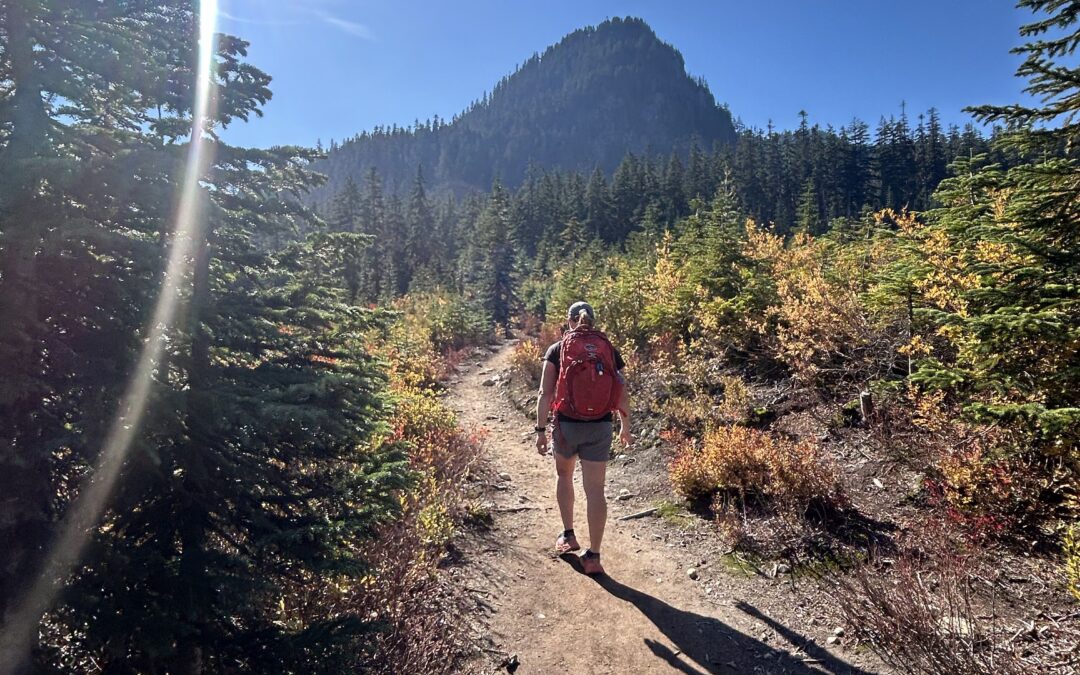
Strength training for hiking downhill is the missing link for most trekkers. We’ve all been there: You’re six miles into a stunning descent, the views are incredible, but you can’t enjoy them because your knees feel like they’re being poked with hot needles. Or perhaps it’s your lower back that starts to scream the moment you put on a 20-pound pack.
As both a Physical Therapist and a Personal Trainer, I see this “trail fatigue” constantly. Most hikers train by just… hiking more or spending hours on a StairMaster. While cardio is great, hiking is actually a high-stakes game of single-leg stability and eccentric loading. If you want to stop “surviving” your hikes and start dominating them, we need to move past the basic squat. Here is the clinical approach to building a body that’s truly trail-resilient.
The “Hidden” Culprit: Why the Downhill Hurts
In the PT world, we talk a lot about eccentric strength. This is your muscle’s ability to “pay out” length under tension—basically, your body’s braking system.
When you hike uphill, your muscles are shortening (concentric). But when you go downhill? Your quads and calves are lengthening to control your descent against gravity. If your “brakes” are weak, your joints (specifically your knees and ankles) take the impact instead.
The Goal: We don’t just want strong legs; we want legs that can absorb force.
5 Functional Exercises for Hiking Downhill
To mimic the uneven, unpredictable nature of a trail, you need to train your kinetic chain—how your foot, knee, hip, and core work together.
1. The Lateral Step-Down (The “Knee Saver”)
- The Move: Stand on a 6-inch step or a sturdy book. Keeping one foot on the step, slowly lower the other heel to the floor. Tap the floor lightly and drive back up.
- PT Insight: This is the gold standard for preventing “Hiker’s Knee.” It forces your glute medius to stabilize your pelvis, preventing your knee from caving inward.
2. Single-Leg RDL (The Ankle & Balance King)
- The Move: Stand on one leg with a slight bend in the knee. Hinge at the hips, sending your non-standing leg back like a see-saw. Keep your hips square to the ground.
- Trainer Tip: Hiking is essentially a series of thousands of single-leg balances. This move builds proprioception—your brain’s ability to know where your ankle is in space—which is your #1 defense against a rolled ankle.
3. The Copenhagen Plank (The Stability Secret)
- The Move: Side plank with your top foot resting on a bench or chair and your bottom leg tucked underneath.
- PT Insight: Most hikers ignore their adductors (inner thighs). These muscles are crucial for stabilizing the pelvis on rocky, uneven terrain. A strong inner thigh means less lower back pain.
4. Tempo Goblet Squats
- The Move: Hold a weight at chest height. Take 3 full seconds to lower into the squat, hold for 1 second, then drive up.
- Trainer Tip: That slow descent is the “eccentric” work we talked about. This builds the endurance your quads need to handle a 2,000-foot descent without getting the “jelly leg” shakes.
5. Weighted Farmer’s Carries
- The Move: Grab the heaviest dumbbells you can safely hold and walk for 50 feet with perfect, upright posture.
- Why it works: This is the ultimate “pack-prep.” It trains your core to stay rigid while your limbs move, protecting your spine from the shifting weight of a backpack.
The 2-Minute Trailhead “Unlock”
Before you hit the trail, don’t do “static” stretching (holding a stretch). That actually relaxes the muscles you’re about to need. Instead, do Dynamic Activation:
- 20 Leg Swings: Wakes up the hip flexors.
- 10 “World’s Greatest” Stretches: Opens the mid-back and hips.
- 30 Seconds of Ankle Circles: Preps the joint for rocks and roots.
Final Thoughts from the Clinic
Training for hiking isn’t about being the strongest person in the gym; it’s about being the most stable person on the mountain. When you focus on single-leg strength and “braking” power, those long miles start to feel like a playground rather than a chore.
Ready to take your training to the next level? If you enjoyed these functional moves, check out my At-Home Strength Training for Hikers Guide for a full body circuit you can do in your living room!
About the Author
Cary Davis is a Physical Therapist Assistant and Certified Personal Trainer dedicated to helping outdoor enthusiasts move better and stay injury-free. By combining clinical science with practical gym strength, they help hikers build the resilience needed to tackle any trail.