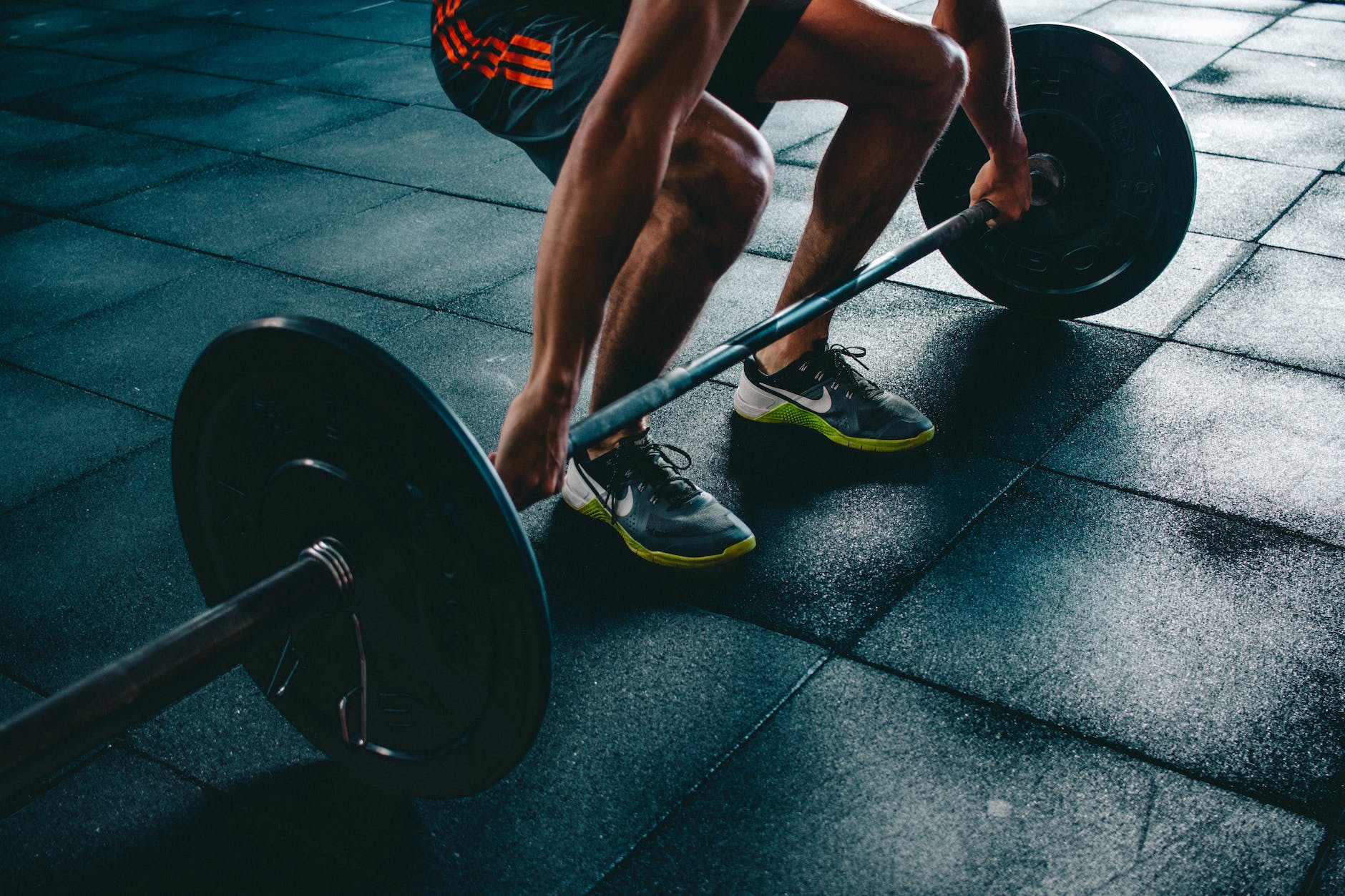
Walking into a gym for the first time—or returning after a long break—can feel overwhelming.
There are machines you may not recognize, people who seem like they know exactly what they’re doing, and dozens of different exercises to choose from.
The good news is that you don’t need to know how to use everything in the gym to get started.
As a personal trainer and licensed Physical Therapist Assistant, I’ve worked with plenty of people who want to get stronger and improve their fitness but simply aren’t sure what to do when they walk into the gym.
A good beginner gym workout doesn’t need to be complicated. Start with a few basic exercises, learn how to perform them well, and gradually build from there.
What Should a Beginner Do at the Gym?
If you’re new to the gym, one of the easiest ways to start is with a simple full-body workout two or three days per week.
Instead of trying to use every piece of equipment, focus on a few basic movement patterns:
- A lower-body exercise
- An upper-body pushing exercise
- An upper-body pulling exercise
- A hip-dominant exercise
- A core exercise
This gives you a simple structure to follow while you become more comfortable with the equipment.
You can always add more variety later.
Your First Day at the Gym
Your first workout doesn’t need to leave you exhausted.
Give yourself time to look around, learn where equipment is located, and figure out how different machines are adjusted.
Start with about 5–10 minutes of easy movement on a treadmill, bike, elliptical, or rowing machine. The goal is simply to get moving and prepare for your workout.
Then move into a short full-body strength session.
If you don’t know how to adjust a machine or use a piece of equipment, ask a trainer or gym staff member for help rather than guessing.
A Simple Beginner Gym Workout
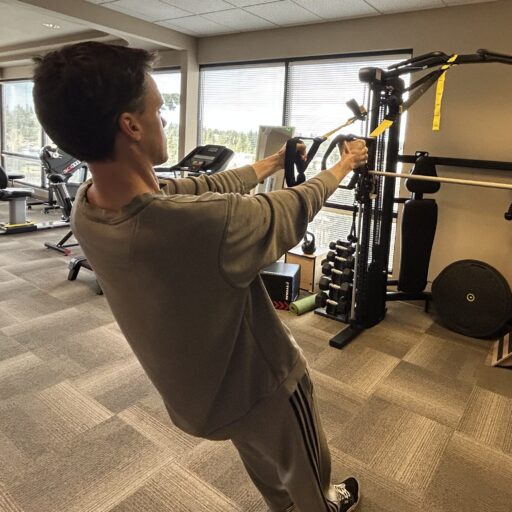
Here is a straightforward full-body workout you can use when you’re getting started.
Leg Press
2–3 sets of 8–12 repetitions
The leg press is an approachable way to begin strengthening your quads, glutes, and other lower-body muscles while getting comfortable with resistance training.
Chest Press
2–3 sets of 8–12 repetitions
A chest press machine provides a guided upper-body pushing movement and works your chest, shoulders, and triceps.
Seated Row
2–3 sets of 8–12 repetitions
The seated row trains the muscles of your upper back and arms and introduces an important upper-body pulling movement.
Dumbbell Romanian Deadlift
2–3 sets of 8–12 repetitions
This exercise introduces a hip-hinge movement and works your hamstrings, glutes, and muscles involved in maintaining your trunk position.
Start with light dumbbells while you learn the movement.
Plank
2–3 sets of 20–40 seconds
A plank is a simple way to begin building core strength and control.
Rest approximately 60–90 seconds between strength-training sets as needed.
You don’t have to perform every set to complete exhaustion. Especially when you’re learning, choose resistance that allows you to perform your repetitions with good control.
How Do You Choose the Right Weight?
One of the most common questions beginners have is how much weight they should use.
Start lighter than you think you need.
You should be able to perform each repetition with control while maintaining good technique. Toward the end of the set, the exercise should feel challenging, but you should still feel like you could perform a couple more good repetitions.
If 10 repetitions feel extremely easy, you can gradually increase the resistance.
If you can’t complete the repetitions with good control, reduce the weight.
Write down the weights you use so you have a starting point for your next workout.
How Often Should Beginners Go to the Gym?
You don’t need to work out every day to make progress.
For many beginners, two or three full-body strength workouts per week is a manageable place to start.
You can also include walking, cycling, swimming, hiking, or other cardiovascular activities on other days.
The important part is choosing a schedule you can realistically maintain.
Three consistent workouts every week will generally be more useful than doing six workouts one week and then avoiding the gym for the next two.
Should Beginners Use Machines or Free Weights?
Both can be useful.
Machines can make it easier to learn certain movements because the equipment guides the path of motion. Dumbbells and other free weights provide more freedom of movement and can gradually be incorporated as you become more comfortable.
You don’t have to choose one or the other.
A beginner workout can include a combination of machines, dumbbells, cables, and bodyweight exercises.
The best equipment is equipment you can use comfortably and progressively for your goals.
How Do You Know If You’re Doing an Exercise Correctly?
You don’t need perfect technique before you’re allowed to exercise, but you should feel comfortable and in control of the movement.
Pay attention to a few basics:
- Move through each repetition with control
- Use a weight you can manage
- Avoid rushing through repetitions
- Stop if an exercise causes sharp or unusual pain
- Ask for help when you’re unsure how to use equipment
Learning new exercises takes practice.
Your technique and confidence should improve as you repeat the movements.
Common Beginner Gym Mistakes
One of the easiest ways to make the gym harder than it needs to be is trying to do too much too quickly.
Common mistakes include:
- Starting with too many exercises
- Using more weight than you can control
- Changing workouts constantly
- Copying advanced workouts from social media
- Training extremely hard every session
- Comparing yourself to experienced gym members
- Not keeping track of your workouts
You don’t need an advanced program when you’re beginning.
You need a program you understand and can consistently follow.
How to Make Progress in the Gym
Once your workouts start feeling more comfortable, gradually give your body a little more work.
That could mean:
- Adding a small amount of weight
- Performing another repetition
- Improving your technique
- Adding a set
- Gradually trying a more challenging exercise
You don’t need to change everything at once.
Small improvements over weeks and months are what allow your training to progress.
What If You Feel Intimidated at the Gym?
Feeling unsure when you first start is common.
Remember that you don’t need to know how every machine works, and you don’t need to perform complicated exercises to have a productive workout.
Walk in with your workout already written down.
Know which five exercises you’re going to perform, approximately how many sets you’re doing, and where you’ll start.
Having a plan removes a lot of the uncertainty.
And if a machine is unfamiliar, ask someone who works at the gym to show you how to adjust it.
Start Simple and Build From There
Starting at the gym doesn’t require a perfect workout plan.
Begin with a few exercises you can perform comfortably, train consistently, and gradually increase the challenge as you become stronger and more confident.
Over time, you can add new exercises and make your training more specific to your goals.
If you’d like a personalized program instead of figuring everything out on your own, I offer online and in-person personal training based on your goals, experience, schedule, and available equipment.
Learn more about personal training with Aspire for Adventure.