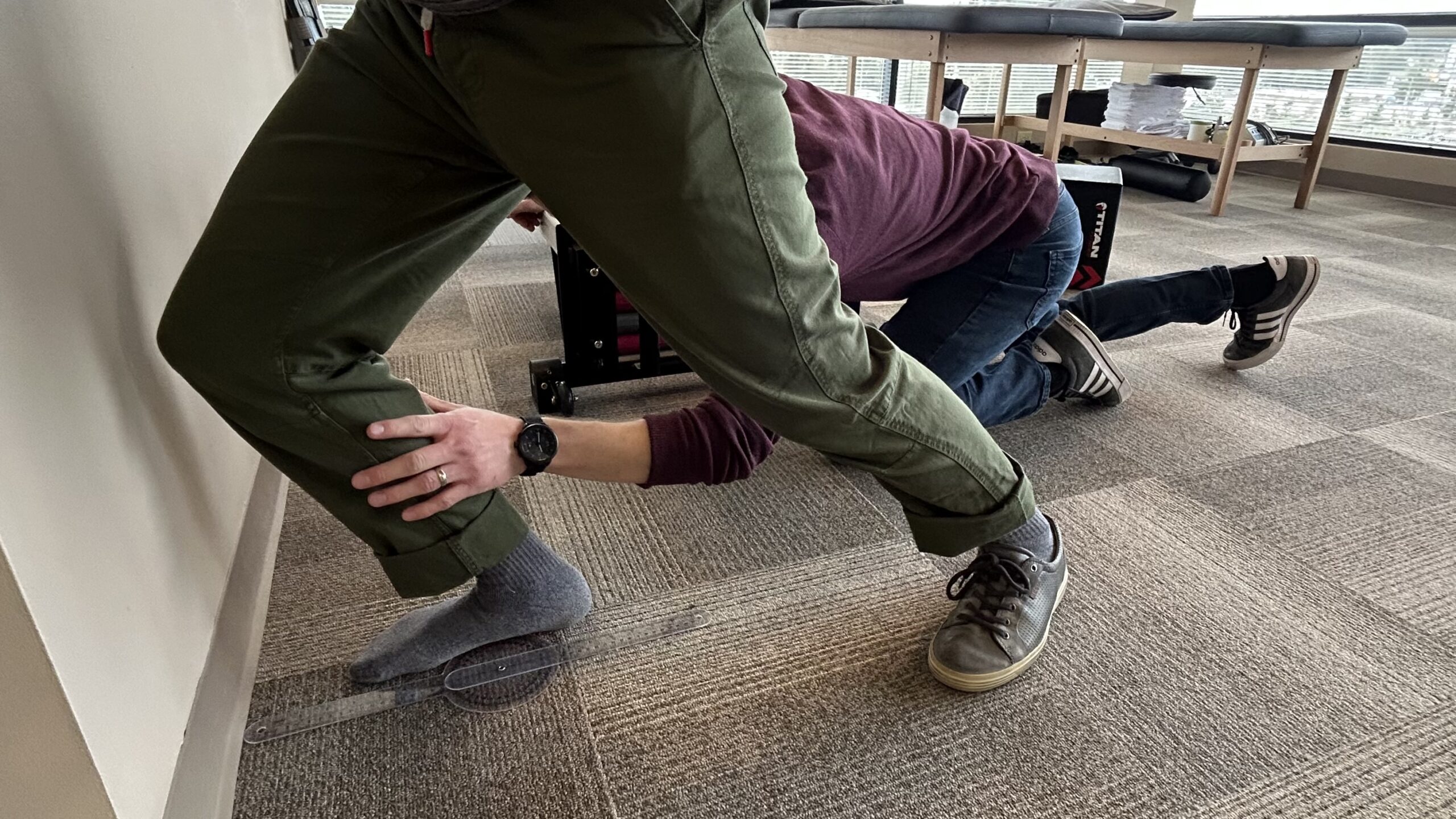
Strong ankles are important for hiking, especially when you’re navigating uneven trails, rocks, roots, steep climbs, and long descents. Your ankles are constantly making small adjustments to help you stay balanced and stable with every step.
But ankle strength is easy to overlook when you’re training for hiking.
Most hikers spend plenty of time strengthening their legs and improving cardiovascular endurance, but your feet and ankles are your connection to the trail. Adding a few simple ankle strengthening exercises to your routine can help improve strength, balance, stability, and control on uneven terrain.
Why Is Ankle Strength Important for Hiking?
Walking on a sidewalk is predictable. Hiking trails aren’t.
Rocks, roots, loose gravel, mud, slopes, and uneven surfaces require your ankles to continually adjust to the terrain. Add a backpack, elevation gain, or tired legs at the end of a long hike, and maintaining stability becomes even more important.
Improving ankle strength and stability can help with:
- Balance on uneven terrain
- Ankle stability on rocks, roots, and loose surfaces
- Control during steep downhill hiking
- Single-leg strength and stability
- Foot and ankle strength
- Overall confidence on the trail
You don’t need an entire workout dedicated to your ankles. A few targeted exercises performed consistently can be a great addition to your regular hiking strength training.
3 Ankle Strengthening Exercises for Hikers
These are three of my favorite simple exercises for improving ankle strength, balance, and stability for hiking.
1. Single-Leg Balance
Stand on one leg and maintain your balance while keeping your hips level and your standing foot stable.
It sounds simple, but single-leg balance is highly relevant to hiking. Every step you take requires you to briefly support your body on one leg, and uneven terrain makes that much more challenging.
As your balance improves, you can progress the exercise by increasing the amount of time you hold the position or adding small movements.
Try: 30–60 seconds on each leg for 2–3 rounds.
2. Banded Ankle Inversion and Eversion
Resistance-band ankle exercises are a simple way to strengthen the muscles that control side-to-side movement of the foot and ankle.
For inversion, slowly move your foot inward against the resistance of the band. For eversion, move your foot outward against the resistance.
Keep both movements slow and controlled.
These muscles help stabilize your ankle as your foot adjusts to uneven terrain, making banded inversion and eversion useful exercises for hikers and trail runners.
Try: 2–3 sets of 10–15 repetitions in each direction on each foot.
3. Slow Step-Downs
Stand on a step or low box with one foot near the edge. Slowly lower the opposite heel toward the ground, keeping the movement controlled, then return to the starting position.
The key word here is slow.
Slow step-downs strengthen the muscles that help control your body as you lower yourself, which makes this exercise especially useful when preparing for downhill hiking.
Long descents can be surprisingly demanding. Your quads, hips, knees, feet, and ankles all work together to control each step.
Try: 2–3 sets of 8–12 repetitions on each side.
Watch These Ankle Exercises for Hiking
Want to see all three exercises?
I demonstrate single-leg balance, banded ankle inversion and eversion, and slow step-downs in this quick ankle strengthening video:
These exercises don’t require a complicated workout. Add them to your strength training routine a few times per week to work on ankle strength, balance, and stability.
What About Foot Pain and Plantar Fasciitis?
Your feet and ankles work together, so foot strength, ankle mobility, calf mobility, and overall training load are also worth paying attention to when you’re increasing your hiking mileage.
Plantar fasciitis is one common source of heel and foot pain in hikers, runners, and active adults.
If the bottom of your foot is sore, rolling it over a frozen water bottle can provide temporary relief while combining cold with gentle massage.
I demonstrate how to do it here:
An ice water bottle can help with symptoms, but it doesn’t address every possible cause of plantar fasciitis. Strength, mobility, footwear, training volume, and recovery may all need to be considered if foot pain continues.
How Often Should You Do Ankle Strengthening Exercises?
For most hikers, two to three times per week is a reasonable starting point.
You can add these exercises at the end of a strength workout, after an easier training session, or as part of your regular hiking training routine.
You can also gradually make ankle exercises more challenging as your strength and balance improve. The goal isn’t just to get better at the exercises. It’s to build strength and stability that carries over to the trail.
Stronger Ankles for Stronger Hiking
Hiking training isn’t just about stronger legs or better cardiovascular endurance.
Your feet and ankles have to handle every step you take.
Training ankle strength, balance, and stability can better prepare you for uneven terrain, rocky trails, steep climbs, and long descents. And it doesn’t take much. A few focused exercises performed consistently can make ankle training a simple part of your overall hiking preparation.
If you’re training for a big hike, backpacking trip, or trekking adventure and want a plan designed around your goals, I offer personalized online hiking training through Aspire for Adventure.
Learn More About Online Hiking Training →Hiking Training