Functional strength training is about building strength that carries over to the way you move in everyday life, recreation, and sports. A good functional strength training program includes exercises that develop basic movement patterns such as squatting, hinging, pushing, pulling, stepping, carrying, and stabilizing your core.
As a personal trainer and licensed Physical Therapist Assistant, I like functional strength training because it can be adapted to almost anyone. The exercises don’t need to be complicated or flashy. In fact, many of the most useful functional strength exercises are basic movements performed well and progressively made more challenging.
Whether your goal is to get stronger, improve your overall fitness, perform better in a sport, prepare for hiking and other outdoor activities, or simply make everyday movement easier, functional strength training can be a valuable part of your routine.
Below are 10 of my favorite functional strength training exercises, followed by a full-body workout you can use to put them together.
What Is Functional Strength Training?
Functional strength training focuses on developing strength through movement patterns that have some carryover to everyday activities, recreation, or sports.
Think about movements you perform regularly: getting up from a chair, climbing stairs, picking something up from the floor, carrying groceries, pushing something heavy, or putting an object on a shelf.
Those activities involve combinations of basic movement patterns, including:
- Squatting
- Hinging
- Lunging and stepping
- Pushing
- Pulling
- Carrying
- Stabilizing your trunk
A good functional strength program trains several of these patterns rather than relying on complicated exercises simply because they look more athletic.
Traditional strength exercises can also be functional. A squat doesn’t stop being functional because you’re holding a dumbbell or using a barbell. What matters is whether the exercise helps you develop the strength, control, and capacity you need for your goals.
Benefits of Functional Strength Training
One of the biggest advantages of functional strength training is that it can accomplish several things within the same program.
Depending on the exercises you choose, it can help you:
- Build full-body strength
- Improve muscular endurance
- Develop balance and coordination
- Strengthen your core
- Improve your ability to carry and control loads
- Prepare for recreational activities and sports
- Make everyday physical tasks feel easier
It can also be scaled for different fitness levels. A beginner might perform a squat to a bench using body weight, while a more experienced lifter could perform a heavier goblet or front squat.
The movement pattern is similar, but the challenge is appropriate for the person performing it.
10 Best Functional Strength Training Exercises
There isn’t one perfect list of functional exercises for everyone. Your exercise selection should depend on your goals, experience, available equipment, and any limitations you have.
That said, these 10 exercises cover many of the fundamental movement patterns I like to include in a well-rounded strength program.
1. Goblet Squat
The goblet squat is one of my favorite ways to train the squat pattern.
Holding a dumbbell or kettlebell in front of your body allows you to add resistance while maintaining a relatively simple setup.
How to do it:
Hold a dumbbell or kettlebell close to your chest. Sit your hips down and back while allowing your knees to bend. Keep your feet planted and your torso controlled. Push through your feet to return to standing.
Try 3 sets of 8–12 repetitions.
Why I like it:
Squatting builds strength through your hips and legs and has obvious carryover to movements such as getting up from a chair, lifting from lower positions, and navigating activities that require repeated bending and standing.
2. Romanian Deadlift
The Romanian deadlift trains the hip-hinge pattern and strengthens the glutes, hamstrings, and muscles involved in maintaining trunk position.
How to do it:
Hold dumbbells in front of your thighs. Keep a slight bend in your knees and push your hips backward while keeping the weights close to your legs. Lower until you feel tension through your hamstrings, then drive your hips forward to stand.
Try 3 sets of 8–12 repetitions.
Why I like it:
Learning to hinge at the hips is useful for lifting and controlling loads while also developing posterior-chain strength.
3. Step-Up
Step-ups are especially useful because they train one leg at a time.
How to do it:
Place one foot completely on a sturdy box or step. Push through that foot to bring yourself onto the step. Control the movement as you return to the floor.
Try 3 sets of 8–10 repetitions on each leg.
Why I like it:
Step-ups build single-leg strength and control and translate particularly well to stairs, hiking, and activities that involve climbing.
4. Reverse Lunge
Reverse lunges challenge your legs individually while requiring balance and trunk control.
How to do it:
From standing, step one foot backward and lower toward the floor. Push through your front foot to return to standing.
Try 3 sets of 8–10 repetitions per side.
Why I like it:
Lunges train strength in a split stance and challenge your ability to control your body while moving from one position to another.
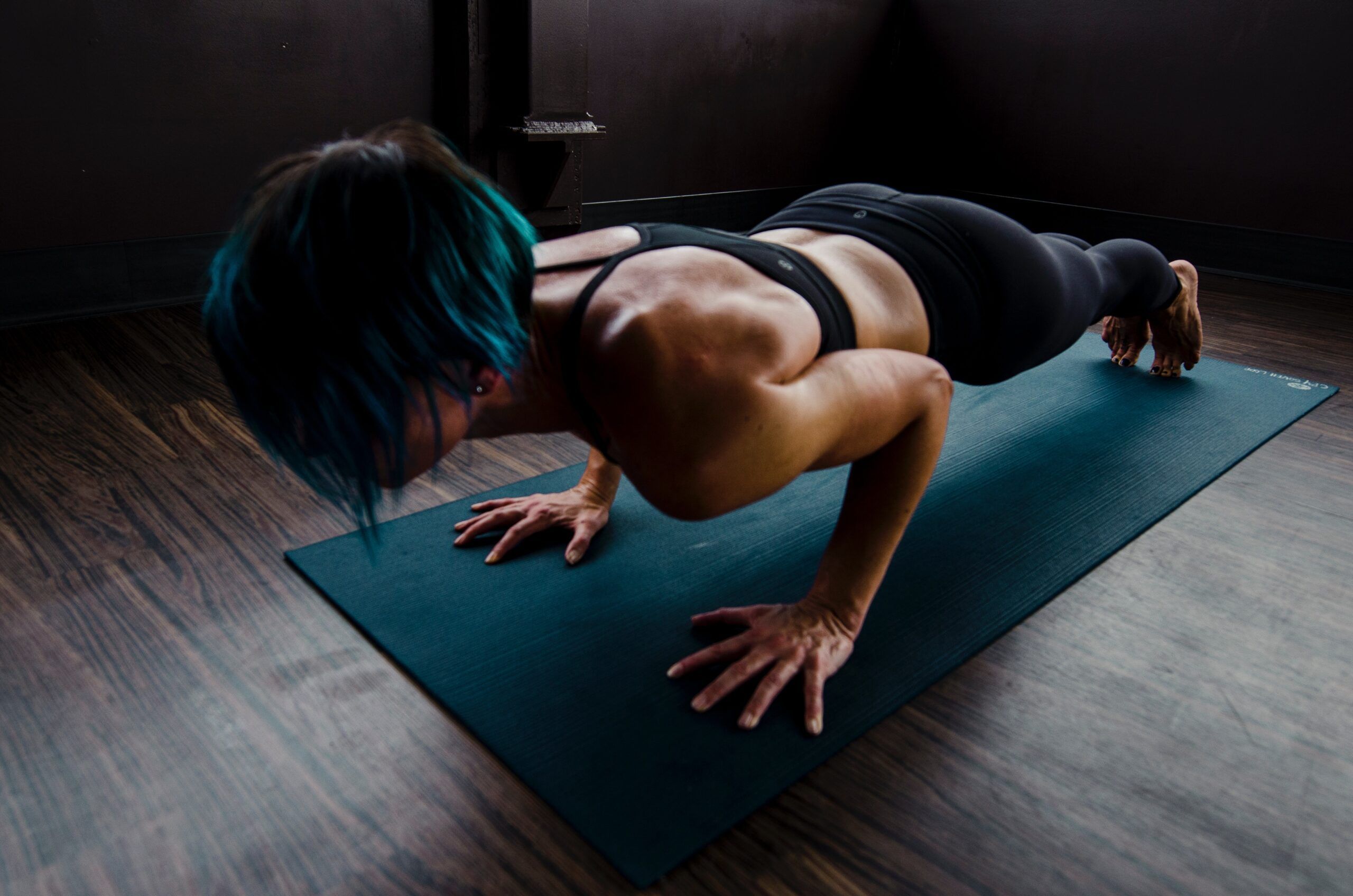
5. Push-Up
You don’t need complicated equipment to train functional upper-body strength.
The push-up trains your chest, shoulders, triceps, and core together.
How to do it:
Start in a plank position with your hands slightly wider than shoulder width. Maintain a controlled body position as you lower your chest toward the floor, then press yourself back up.
If a floor push-up is too difficult, elevate your hands on a bench or other stable surface.
Try 3 sets of 6–15 repetitions.
6. One-Arm Dumbbell Row
Rows develop pulling strength through the upper back and arms while requiring your trunk to remain stable.
How to do it:
Support yourself with one hand on a bench if needed. Hold a dumbbell in the opposite hand and pull it toward your torso while keeping your shoulders and trunk controlled.
Try 3 sets of 8–12 repetitions per arm.
Why I like it:
Pulling is an important movement pattern that complements pushing exercises and helps build a balanced upper-body strength program.
7. Half-Kneeling Dumbbell Press
A half-kneeling press adds a stability component to a traditional overhead press.
How to do it:
Kneel with one knee on the floor and the opposite foot in front of you. Hold a dumbbell at shoulder height and press it overhead while keeping your torso controlled.
Try 3 sets of 8–10 repetitions per arm.
Why I like it:
You get upper-body pressing strength while also challenging your trunk and hips to maintain position.
8. Farmer Carry
Farmer carries look simple, but they’re one of my favorite full-body functional exercises.
How to do it:
Hold a challenging dumbbell or kettlebell in each hand. Stand tall and walk while maintaining a controlled posture.
Try 3 rounds of 30–60 seconds.
Why I like it:
Carries challenge your grip, shoulders, core, and overall ability to move while controlling a load. They also have very obvious real-world carryover because carrying things is something most of us actually do.
9. Pallof Press
Not all core training needs to involve crunches or twisting.
The Pallof press trains your core to resist rotation.
How to do it:
Stand perpendicular to a cable machine or anchored resistance band. Hold the handle at your chest, then press your arms straight out in front of you without allowing your torso to rotate toward the anchor.
Return to the starting position with control.
Try 3 sets of 8–12 repetitions per side.
10. Dead Bug
The dead bug is another useful core exercise that teaches you to maintain trunk control while moving your arms and legs.
How to do it:
Lie on your back with your hips and knees bent and your arms extended toward the ceiling. Slowly extend one leg and the opposite arm while maintaining a controlled trunk position. Return and repeat on the other side.
Try 3 sets of 6–10 repetitions per side.
Full-Body Functional Strength Training Workout
You don’t need to perform all 10 exercises every time you train.
Here’s a simple full-body functional strength workout using several of the movements above.
Warm-Up
Spend about 5–10 minutes gradually preparing for the workout.
You might include:
- Bodyweight squats
- Alternating reverse lunges
- Glute bridges
- Arm circles
- Hip hinges
- Easy cardio
Workout
Perform:
Goblet squat — 3 sets of 8–12 reps
One-arm dumbbell row — 3 sets of 8–12 reps per side
Romanian deadlift — 3 sets of 8–12 reps
Push-ups — 3 sets of 6–15 reps
Step-ups — 3 sets of 8–10 reps per leg
Farmer carry — 3 rounds of 30–60 seconds
Pallof press — 3 sets of 8–12 reps per side
Rest approximately 60–90 seconds between exercises or as needed to maintain good form.
You can also perform some of the exercises as pairs. For example, alternate goblet squats with rows, or push-ups with step-ups.
Functional Strength Training for Beginners
If you’re new to strength training, don’t feel like you need to start with advanced variations.
Start by learning the basic movement patterns.
For example:
Use a bench or box to help you learn your squat.
Perform an elevated push-up rather than a floor push-up.
Use lighter dumbbells for your Romanian deadlift.
Choose a lower step for step-ups.
Perform supported reverse lunges if balance is challenging.
Gradually increase the resistance or difficulty as the movements become more comfortable.
You don’t need to leave every workout exhausted for it to be effective. Consistency and gradual progression matter much more than making every workout as difficult as possible.
How Often Should You Do Functional Strength Training?
For many people, two or three full-body strength workouts per week can work well.
How often you should train depends on your goals, training experience, other activities, and ability to recover.
If you run, hike, cycle, play sports, or participate in other demanding activities, your strength program should fit around those activities rather than compete with them.
You also don’t need to perform the same workout indefinitely.
As you get stronger, you can progress your program by:
- Increasing resistance
- Adding repetitions
- Adding sets when appropriate
- Improving movement control
- Progressing to a more challenging variation
- Increasing carrying distance or duration
Progress gradually rather than changing everything at once.
Is Functional Training Different From Regular Strength Training?
Not necessarily as much as the fitness industry sometimes makes it sound.
Functional training doesn’t require standing on unstable equipment, combining five exercises into one movement, or making exercises unnecessarily complicated.
A well-designed traditional strength program can be highly functional.
Squats, deadlifts, rows, presses, step-ups, lunges, and carries are all strength exercises. They can also be functional exercises when they help develop the movement patterns and physical abilities relevant to someone’s goals.
I prefer to think less about whether an exercise has the label “functional” and more about whether there’s a good reason for that exercise to be in someone’s program.
Functional Strength Training for Hiking and Outdoor Activities
Functional strength training can be especially useful if you’re preparing for hiking, backpacking, or other outdoor activities.
Hiking involves repeated stepping, climbing, descending, balancing on uneven terrain, and sometimes carrying a pack for hours.
Exercises such as step-ups, squats, lunges, Romanian deadlifts, calf raises, rows, and loaded carries can all be incorporated into a hiking strength program.
The training should become more specific as your trip gets closer by combining strength work with walking, hills, stairs, hiking, and eventually carrying the pack you plan to use.
If hiking is your goal, my 12-Week Hiking Training Plan provides a more specific progression for preparing for the trail.
Building a Functional Strength Program That Fits You
The best functional strength training exercises aren’t necessarily the most complicated ones.
A good program starts with your goals and builds around the movements and physical abilities that will help you get there.
For one person, that might mean becoming stronger and more confident with everyday activities. For another, it might mean improving athletic performance. Someone else may be preparing for a backpacking trip or simply trying to build a consistent fitness routine.
Your training should reflect what you’re actually trying to accomplish.
If you’d like a program built around your goals, fitness level, schedule, and available equipment, Aspire for Adventure offers online personal training as well as in-person personal training in Edmonds and surrounding areas.