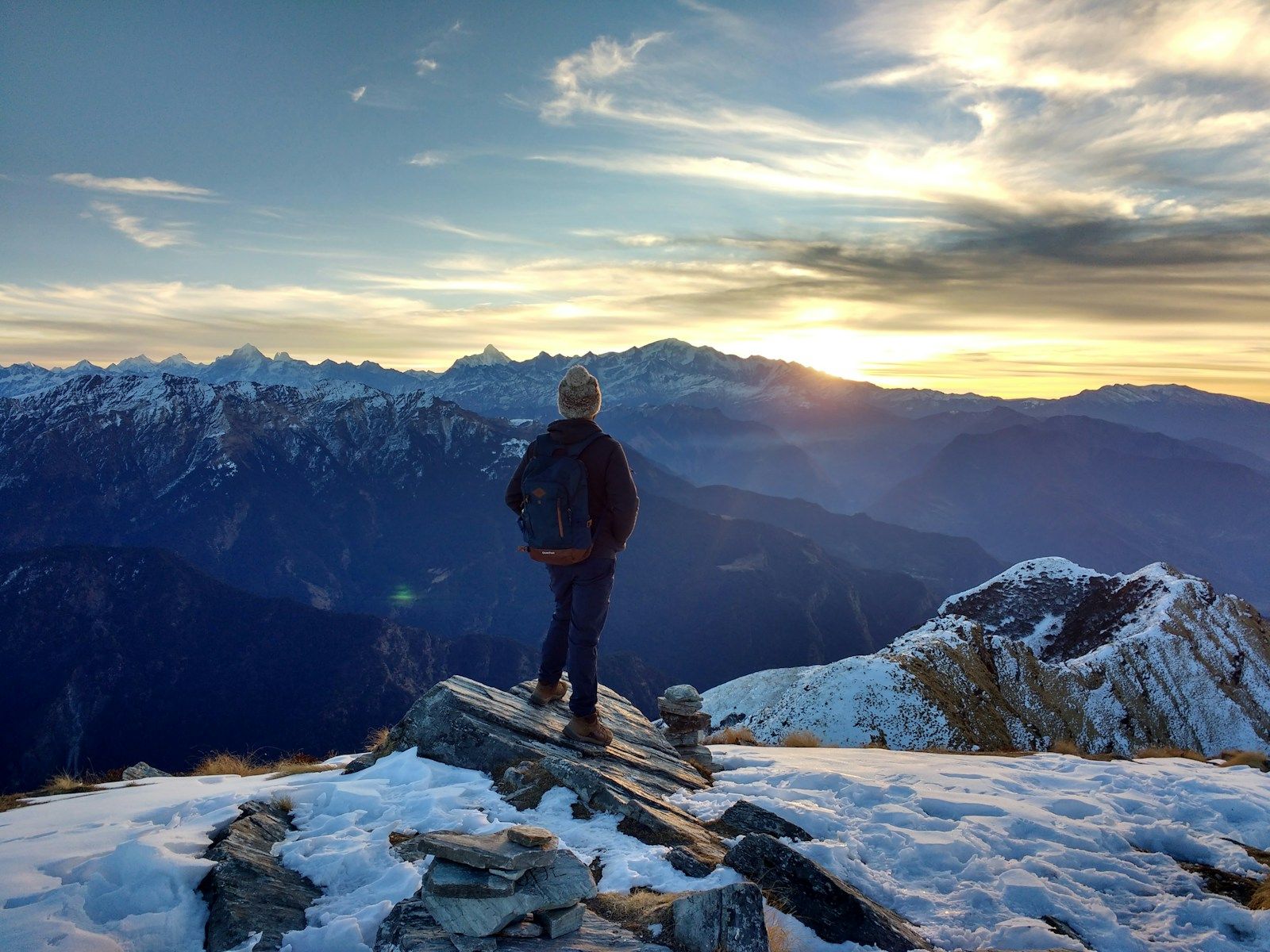
Hiking has always been one of my favorite ways to stay active. You get a workout, spend time outside, explore somewhere new, and often end up doing far more physical activity than you would during a typical workout.
But the benefits of hiking go well beyond simply getting your steps in.
Depending on the trail, hiking can challenge your cardiovascular fitness, leg strength, balance, and endurance. It can also provide a break from screens, work, and everyday routines while giving you time outdoors.
Whether you’re walking a relatively flat local trail or spending the day climbing in the mountains, hiking can be a great addition to an active lifestyle.
Here are 10 reasons to spend more time on the trail.
1. Hiking Builds Cardiovascular Endurance
Hiking can be an excellent form of aerobic exercise.
Walking uphill increases the demand on your cardiovascular system, while longer hikes require you to sustain that effort over time.
The great thing about hiking is that you can adjust the challenge to your current fitness level. A beginner might start with a relatively flat two-mile trail, while an experienced hiker might choose a route involving several hours of climbing.
As your fitness improves, you can gradually increase your distance, elevation gain, or pace.
2. Hiking Strengthens Your Legs
Spend a few hours climbing, and you’ll quickly realize that hiking isn’t just cardio.
Your glutes, quadriceps, hamstrings, and calves all contribute as you climb, descend, and move across changing terrain.
Uphill hiking requires your legs to repeatedly propel your body upward, while descending requires you to control your movement with every step.
If you want to become stronger for the trail, combining hiking with regular strength training can be particularly useful.
3. Hiking Challenges Your Balance and Stability
A treadmill provides a predictable surface. A hiking trail definitely doesn’t.
Rocks, roots, mud, slopes, stream crossings, and uneven ground require you to constantly adjust your position as you move.
That makes hiking very different from walking on a flat sidewalk.
Your feet, ankles, hips, and core all contribute to keeping you stable as the terrain changes beneath you.
Strength training can complement this by improving the strength and control you bring to the trail.
4. Hiking Can Help Build Muscular Endurance
Maximum strength isn’t the only thing that matters on a hike.
Your muscles also need to keep working for a long time.
A single step-up isn’t particularly demanding. Doing the equivalent of thousands of step-ups over several hours is another story.
Long hikes challenge your muscular endurance, particularly when they include sustained climbs and descents.
This is one reason training for a major hiking trip should usually include both strength training and progressively longer walks or hikes.
5. Hiking Gets You Outside
One of my favorite things about hiking is simple: it gets you outdoors.
Instead of staring at a screen or exercising inside, you’re moving through forests, mountains, beaches, deserts, or whatever landscape happens to be nearby.
You also don’t need an epic destination for this to count. A local trail or wooded park can provide an opportunity to move and spend time outside.
For many people, that’s one of the biggest reasons hiking becomes something they actually look forward to rather than another workout they feel obligated to complete.
6. Hiking Can Be a Great Mental Break
There are hikes where I’m concentrating on the scenery, where I’m putting one foot in front of the other on a climb, or where I’m simply enjoying being away from my normal routine.
That’s part of what makes hiking different from a traditional workout.
Physical activity and time outdoors can both support well-being, and hiking gives you an opportunity to experience the two together.
It doesn’t need to replace other ways of managing stress or caring for your mental health. But spending a few hours moving outside can be a welcome reset from work, responsibilities, and screens.
7. Hiking Can Make Exercise More Enjoyable
The “best” form of exercise isn’t very useful if you hate doing it and eventually stop.
Hiking gives exercise a purpose beyond completing a workout.
Maybe you’re trying to reach a lake, viewpoint, mountain pass, waterfall, or campsite. Maybe you’re exploring somewhere you’ve never been. Or maybe you simply enjoy spending the day outside with friends or family.
That can make physical activity feel very different from counting minutes on a cardio machine.
And enjoying the activity you’re doing can make it much easier to keep doing it consistently.
8. Hiking Can Be Adapted to Different Fitness Levels
You don’t have to climb a mountain to be a hiker.
Trails range from short, relatively flat walks to demanding multi-day treks.
If you’re new to hiking, start with a manageable distance and elevation gain. As you become more comfortable, gradually progress to longer trails or more climbing.
That’s also important if you have a major hiking goal.
Someone preparing for the Camino de Santiago will have different training needs from someone preparing for Kilimanjaro, Tour du Mont Blanc, a local day hike, or a backpacking trip.
Your hiking should progress based on where you’re starting and what you’re preparing to do.
9. Hiking Can Support Your Other Fitness Goals
Hiking doesn’t have to replace your other training.
It can work alongside strength training, running, cycling, swimming, or other activities.
For example, someone who strength trains during the week might use the weekend for a longer hike. Someone preparing for a trek might combine strength workouts with shorter conditioning sessions during the week and progressively longer hikes on weekends.
The combination can help you develop different aspects of fitness without doing the same thing every day.
10. Hiking Can Lead to Bigger Adventures
This might be my favorite benefit.
A local hike can eventually lead to your first backpacking trip. That might lead to a multi-day trek. And before you know it, you may find yourself planning an adventure somewhere you never imagined you’d go.
Hiking has been part of many of my own travels and outdoor experiences, and that’s one of the things I love about it.
Fitness becomes a way to do something, rather than being the end goal itself.
You aren’t just getting stronger for the sake of being stronger. You’re building the ability to explore more places and take on experiences that matter to you.
How to Start Hiking
If you’re new to hiking, you don’t need to overcomplicate it.
Start with a relatively short, well-marked trail that’s appropriate for your current fitness level.
Before you go:
- Check the distance and elevation gain.
- Look at the weather forecast.
- Bring enough water and food.
- Wear footwear appropriate for the terrain.
- Carry appropriate layers.
- Know your route.
- Tell someone where you’re going when appropriate.
- Bring additional safety equipment as the distance, terrain, weather, or remoteness requires.
Gradually increase your distance and elevation as you gain experience.
Should You Strength Train for Hiking?
If you hike regularly or you’re preparing for a more challenging trip, I recommend incorporating strength training into your preparation.
Hiking itself builds fitness, but targeted strength training gives you another way to prepare your legs, hips, core, and upper body for the demands of the trail.
Exercises such as squats, step-ups, lunges, Romanian deadlifts, calf raises, rows, and loaded carries can all have a place in a hiking strength program.
If you’d like a structured starting point, try my 30-Day Strength Training Plan for Hikers.
For a longer progression that combines strength, endurance, hills, and hiking, see my 12-Week Hiking Training Plan.
Preparing for a Bigger Hiking Adventure
If you have a specific trip on your calendar, your training should become increasingly specific to what you’ll encounter.
Consider:
- How many miles you’ll hike each day
- How much elevation gain and loss you’ll encounter
- Whether you’ll carry a backpack
- How many consecutive days you’ll be hiking
- The terrain you’ll encounter
- How much time you have to prepare
Someone preparing for a five-day walking trip needs a different program from someone carrying a backpack through mountainous terrain.
That’s why I prefer training around the actual adventure rather than using the same hiking program for everyone.
Build the Fitness to Do More Outside
The benefits of hiking aren’t limited to calories burned or miles walked.
Hiking can build endurance, challenge your strength and balance, get you outside, and give your fitness a purpose. And as you become stronger and more experienced, it can open the door to increasingly ambitious adventures.
You don’t need to start with a mountain.
Start with the trail that’s appropriate for you now and build from there.
If you’re preparing for a specific hike, backpacking trip, or trek and want a training program built around your current fitness level, schedule, equipment, and adventure, Aspire for Adventure offers personalized online hiking training.