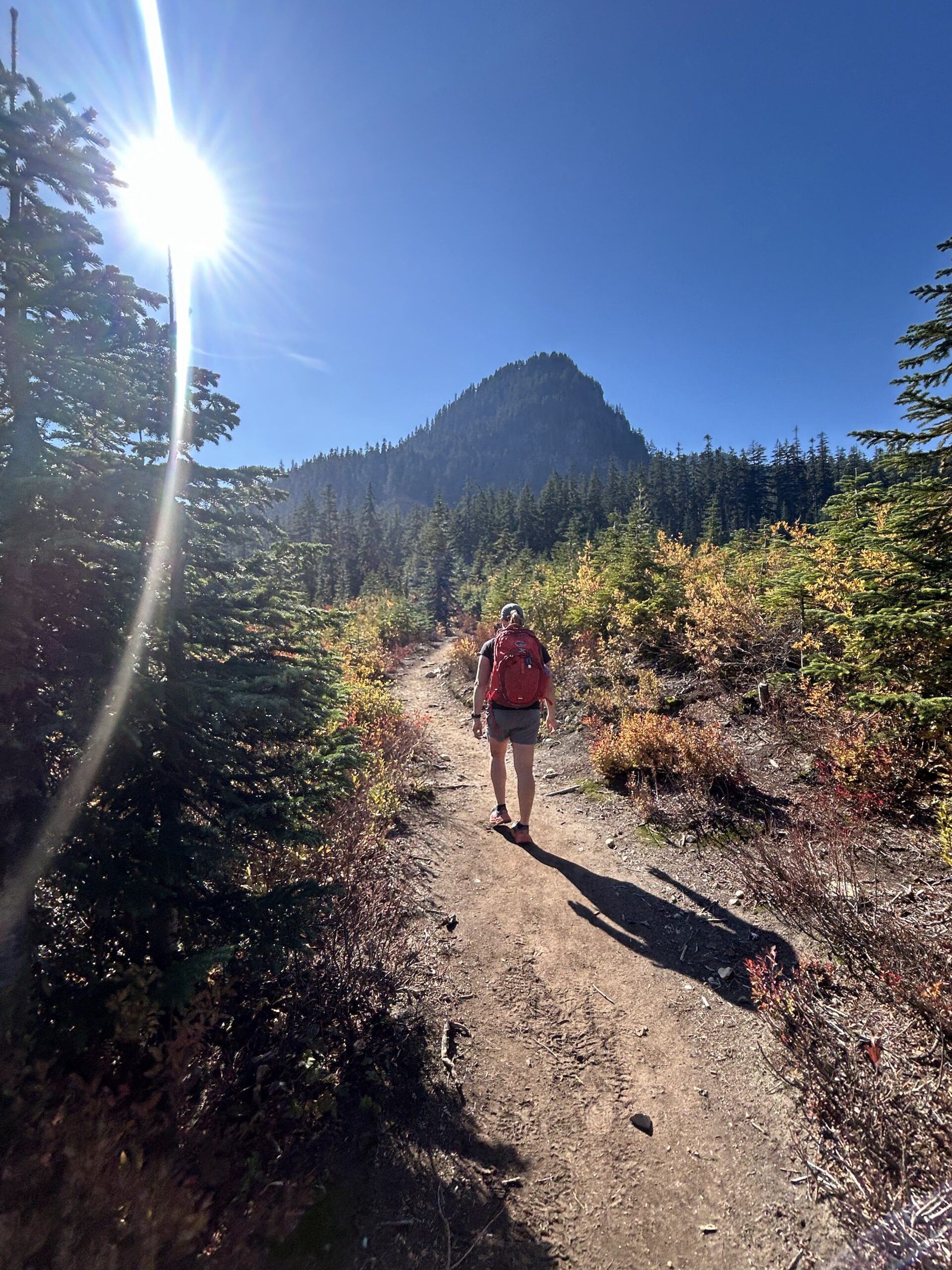
Fall might be my favorite time to hike in Washington.
The crowds begin to thin in some places, the air gets cooler, and trails that looked completely different during summer start turning red, orange, and gold. In the mountains, huckleberry bushes turn brilliant shades of red, while alpine larches put on one of Washington’s best fall displays.
I’ve spent years hiking and backpacking throughout Washington, and these are five hikes I’d put near the top of the list if you’re looking for great fall scenery.
Some are relatively approachable day hikes, while others require significantly more climbing and preparation. Fall conditions in Washington can also change quickly, especially at higher elevations, so always check current trail, road, and weather conditions before leaving.
1. Heather-Maple Pass Loop
North Cascades
Distance: 7.2 miles round trip
Elevation gain: 2,020 feet
Difficulty: Moderate to challenging
Best for: Larches, mountain views, classic North Cascades scenery
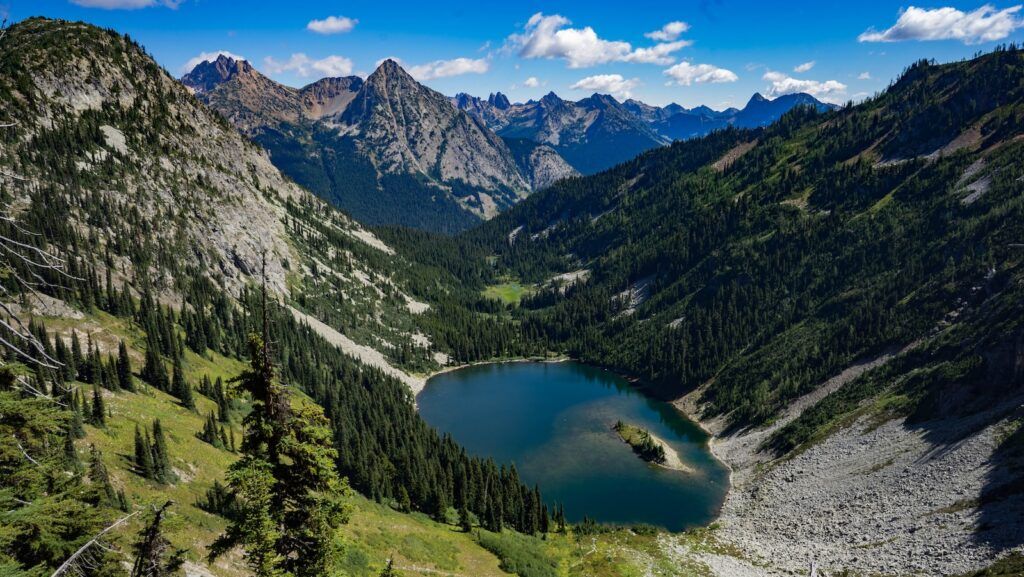
Heather-Maple Pass Loop is one of the best places in Washington to see fall color, especially if you’re hoping to catch the larches.
The trail climbs from Rainy Pass into high alpine terrain with expansive views of the North Cascades. In fall, the landscape becomes a mix of golden larches, colorful shrubs, evergreen forest, lakes, and rugged peaks.
Washington Trails Association currently lists the loop at 7.2 miles with 2,020 feet of elevation gain.
There is a decent amount of climbing, so don’t let the 7-mile distance fool you. It’s a workout, especially if you haven’t been hiking regularly.
This is an extremely popular fall destination. If you’re hiking during peak larch season, don’t expect solitude. Going on a weekday and starting early can make the experience much better.
2. Skyline Trail at Mount Rainier
Mount Rainier National Park — Paradise
Distance: 5.5 miles round trip
Elevation gain: 1,700 feet
Difficulty: Challenging
Best for: Red fall foliage, huge Mount Rainier views, subalpine scenery
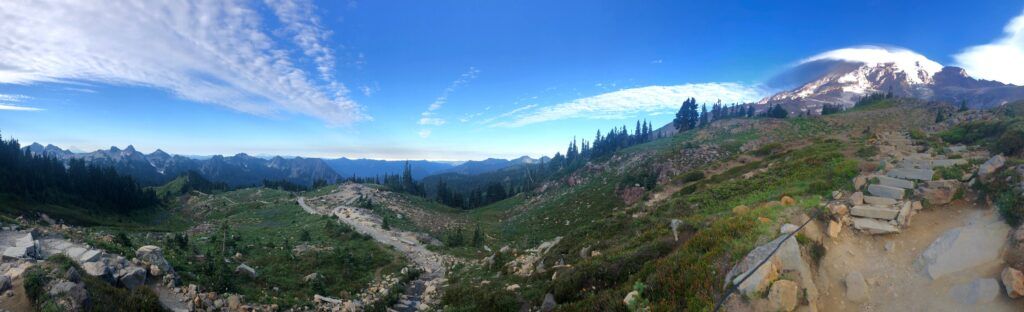
I’ve hiked around Mount Rainier in different seasons, and fall is a great time to visit Paradise. The crowds start to change, temperatures are cooler, and the subalpine vegetation turns red and orange.
The subalpine vegetation begins changing color in September, creating deep reds and oranges beneath Mount Rainier. On a clear day, the combination of fall foliage, glaciers, and the mountain itself is pretty incredible.
The full Skyline Trail is 5.5 miles with approximately 1,700 feet of elevation gain.
One thing to remember is that fall arrives quickly at this elevation. Snow and ice can begin affecting high-elevation trails surprisingly early, so check conditions before heading out.
For 2026, Mount Rainier National Park is not requiring timed-entry reservations, although the park still recommends visiting outside the busiest periods when possible.
3. Colchuck Lake
Leavenworth / Alpine Lakes Wilderness
Distance: 8 miles round trip
Elevation gain: 2,280 feet
Difficulty: Moderate to challenging
Best for: Alpine lake scenery, larches, dramatic mountain views
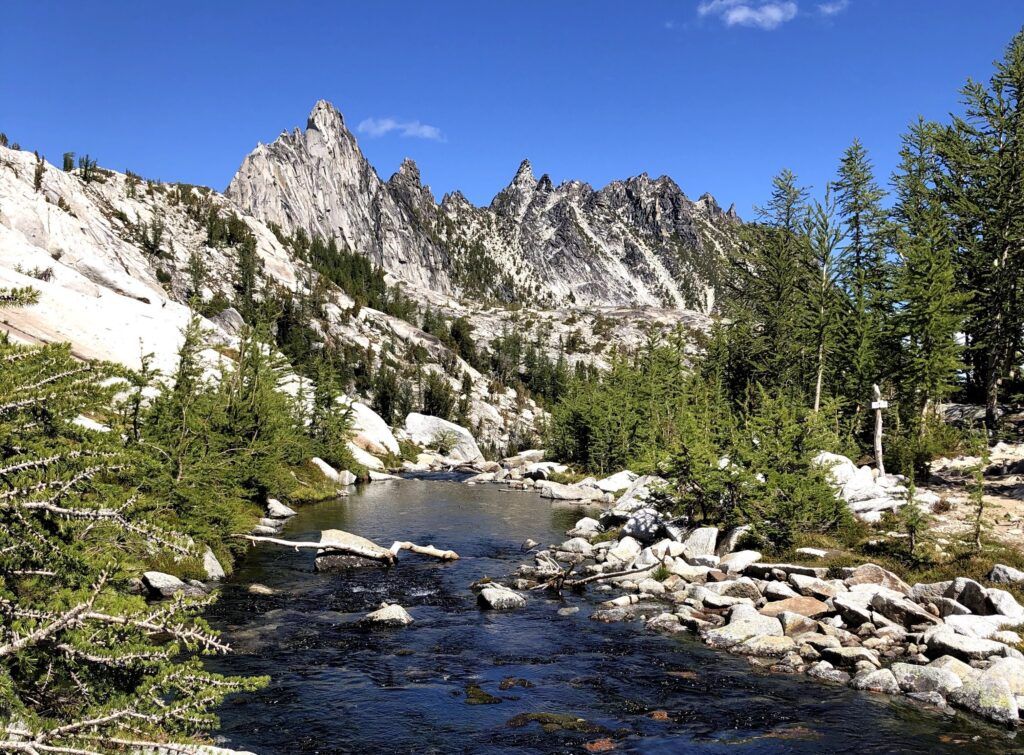
Colchuck Lake is already one of Washington’s most impressive hikes, and fall adds another reason to go: the larches around the lake begin turning gold.
The trail climbs through forest before reaching the brilliant blue-green water of Colchuck Lake beneath Dragontail and Colchuck peaks. Larches grow around the far side of the lake, adding bursts of gold to the granite and turquoise landscape in fall.
The hike is approximately 8 miles round trip with 2,280 feet of elevation gain.
Overnight camping at Colchuck during the Enchantments permit season requires a backcountry permit. Day hikers should still check current Forest Service/WTA rules, parking information, road conditions, and pass requirements before going.
If you’re considering the much more demanding Enchantments thru-hike instead, you can also read my guide to thru-hiking the Enchantments.
4. Chain Lakes Loop
Mount Baker / Heather Meadows
Distance: 6.5 miles round trip
Elevation gain: 1,820 feet
Difficulty: Moderate to challenging
Best for: Fall foliage, alpine lakes, Mount Baker and Mount Shuksan views
The Mount Baker area is one of my favorite places in Washington, and Chain Lakes Loop is a particularly good choice in fall.
The trail travels through the Heather Meadows area with views of Mount Baker, Mount Shuksan, alpine lakes, and colorful meadows.
Washington Trails Association specifically highlights the trail’s fall color and currently lists the loop at 6.5 miles with 1,820 feet of elevation gain. A Northwest Forest Pass or America the Beautiful Pass is listed for parking.
This also gives you options.
If you don’t want to do the entire loop, the Heather Meadows and Artist Point area has several shorter trails where you can still experience mountain scenery and fall color.
The area can get extremely busy on beautiful fall weekends, so I’d go early or choose a weekday if possible. Recent September 2026 trip reports describe heavy parking congestion around Artist Point on busy days.
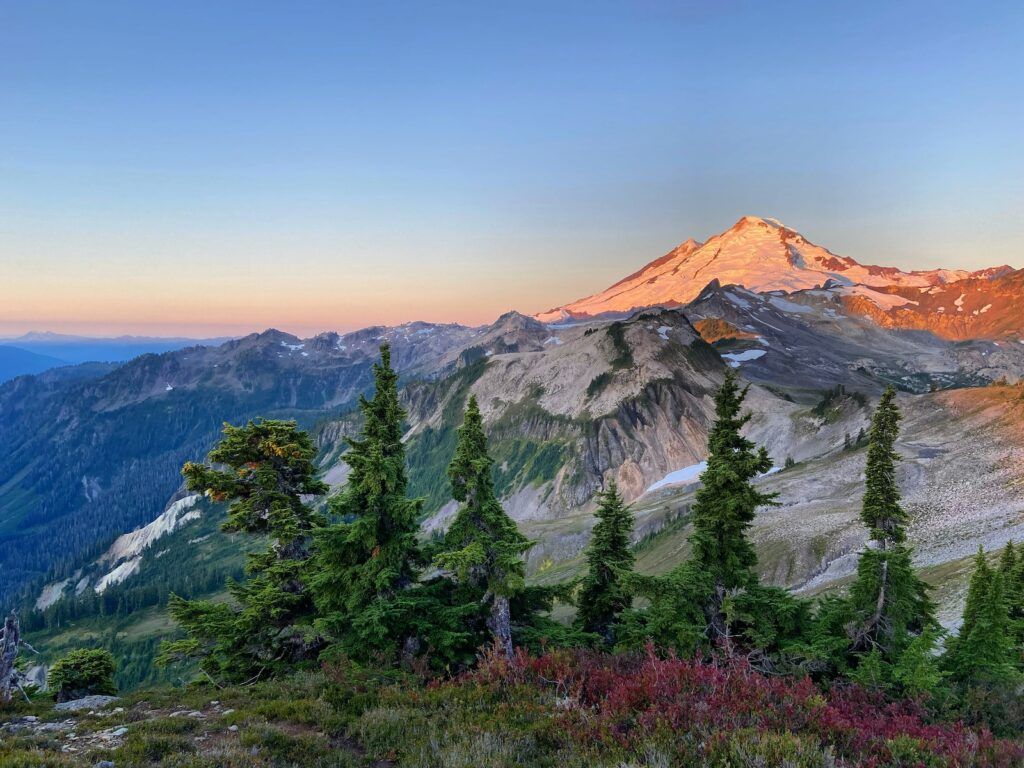
5. Artist Ridge — Huntoon Point
Mount Baker / Artist Point
Best for: A shorter fall hike with huge mountain views
If you want fall scenery without a long, difficult hike, Artist Point is a good option.
Artist Ridge from Artist Point gives you access to spectacular views of Mount Baker and Mount Shuksan without committing to something like Maple Pass or a longer North Cascades hike.
It’s a particularly good option if you’re looking for a shorter outing or want to combine several walks around the Heather Meadows area.
Washington Trails Association notes that the trail begins directly from the Artist Point parking area and that a Northwest Forest Pass or America the Beautiful Pass is required.
For an even easier option nearby, Bagley Lakes is about 2 miles round trip with only 150 feet of elevation gain.
That makes the Mount Baker area especially useful for groups with different hiking abilities—you can still experience beautiful fall mountain scenery without everyone needing to tackle the same difficulty level.
When Is the Best Time for Fall Hiking in Washington?
There isn’t one perfect weekend for fall color across Washington.
Elevation, location, temperature, weather, and the type of vegetation all affect when colors change.
September is when fall color begins appearing in many of Washington’s higher-elevation areas. Golden larches generally become the big attraction later in September and into October, but their timing varies from year to year.
Rather than planning a trip months around one supposed “peak” weekend, check recent trail reports as your hiking date approaches.
That’s especially important for high-elevation hikes because the same weather responsible for beautiful fall conditions can also bring rain, freezing temperatures, ice, or early snow.
Where Can You See Golden Larches in Washington?
Larches are one of the things that make fall hiking in Washington particularly special.
Unlike most conifers, larches are deciduous. Their needles turn brilliant yellow-gold in fall before dropping for winter.
For the hikes in this list, Heather-Maple Pass Loop and the Colchuck/Enchantments area are the strongest choices if seeing larches is your main goal. WTA specifically notes fall larches at Maple Pass and groves of larches at Colchuck Lake.
Larch season is also extremely popular. Expect busy trailheads during peak color, particularly on sunny weekends.
Best Fall Hikes Near Seattle
If you’re searching for fall hikes near Seattle, remember that some of Washington’s most spectacular fall-color hikes require a fairly substantial drive.
Mount Rainier gives you one of the better combinations of accessibility from the Seattle area and dramatic fall scenery. Skyline Trail at Paradise is the challenging option, but shorter Paradise trails can also provide excellent fall color.
The North Cascades, Mount Baker, and Leavenworth-area hikes require more driving, but they’re worth considering if your goal is a full-day fall hiking adventure rather than simply finding the closest trail.
What to Bring on a Washington Fall Hike
Fall hiking requires a little more preparation than hiking during the middle of summer.
Days are getting shorter, temperatures can change dramatically, and mountain weather can shift quickly.
I would bring the Ten Essentials and pay particular attention to:
- Extra insulating layers
- Rain protection
- Headlamp
- Food and water
- Navigation
- First-aid supplies
- Emergency gear
- Gloves and a warm hat when appropriate
Check the weather, trail reports, road status, sunset time, and any permit or parking requirements before leaving home.
And don’t assume that because conditions are comfortable at the trailhead, they’ll remain that way several thousand feet higher.
Get Stronger for Your Fall Hiking Adventures
Fall is one of the best times to hike in Washington, but some of the hikes on this list involve significant elevation gain, long climbs, and demanding descents.
If you want to feel stronger and more prepared on the trail, strength and endurance training can make those bigger hiking days much more manageable.
You can start with my 12-Week Hiking Training Plan if you want a structured approach to building hiking fitness.
And if you’re preparing for a specific hiking, backpacking, or trekking adventure, I offer personalized Online Hiking Training through Aspire for Adventure.